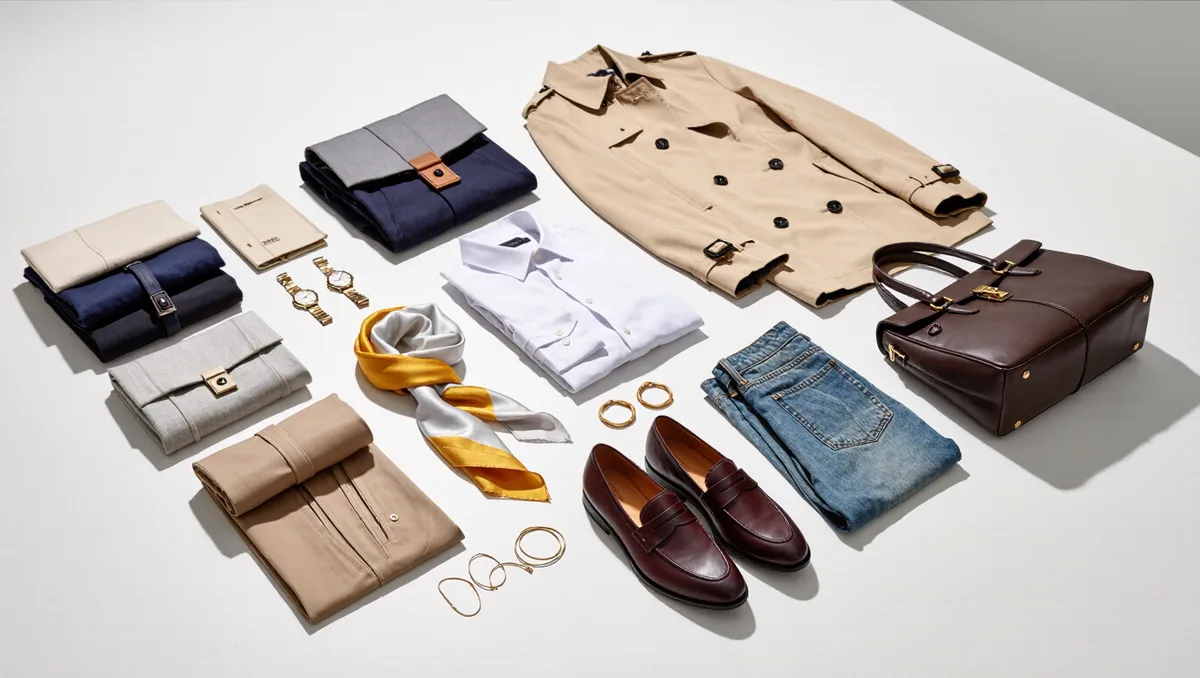
The "investment piece" label gets slapped on nearly everything: shoes, handbags, a silk scarf, a trend coat. Very little of it deserves the word. A real investment, in the ordinary sense of the term, is money you expect to get value back from. As Wikipedia's entry on investment puts it, investment is traditionally the "commitment of resources into something expected to gain value over time" — and most clothes lose value the moment you wear them.
So which wardrobe categories actually justify spending more? The short answer: the ones where higher price reliably buys longer life, better fit, or a lower cost per wear. That usually means shoes you walk in daily, outerwear, and anything that touches your body every single day. It almost never means occasion wear, trend items, or anything bought mainly for the label.
It's worth being precise about the word itself. Real investing — the kind covered by Fidelity's beginner guide to investing — is about growing your net worth over time. A wardrobe purchase does the opposite: it spends money on something that depreciates. That's fine. Clothes aren't supposed to be investments. The trick is telling the few purchases where paying more genuinely pays you back, in wear and years, from the many where it just pays the marketing budget.
What does "investment piece" actually mean?
In retail language, "investment piece" usually means one thing: an excuse for a high price. It reframes an expensive purchase as prudent. Sometimes that reframing is honest. Often it isn't.
The test we use on this desk is simple. A higher price is justified only when you can name what the extra money buys — better materials, better construction, a repairable design, a classic shape that won't date. If the only answer is the brand name, it's not an investment. It's a premium.
There's a second test: would you still call it an investment if it cost half as much? If a plain white shirt at a luxury price is an "investment" but the same shirt at a mid price is just a shirt, the label was doing the work, not the garment.
Which categories are worth the higher spend?
Our analysis points to a small set of categories, and the logic is the same for each: high frequency of wear, visible wear points, and real differences in construction between price tiers.
- Everyday shoes. You walk thousands of steps in them. Cheap shoes often fail at the sole, the heel, or the lining, and a failed shoe can hurt your feet. Construction quality here shows up in how the sole is attached and how the shoe holds its shape.
- Coats and outerwear. A coat is worn over everything, seen constantly, and judged on warmth and shape. Fabric weight, lining, and seam quality vary enormously between price tiers, and a well-made coat can last many seasons.
- Foundation layers. The plain trousers, the everyday knit, the bag you carry daily. These get the most wears, which is exactly where cost per wear does its best work.
For everything else, the honest answer is usually the mid price or the cheap one. We've covered the general case in When the cheap version is the smarter purchase, and the sweater example in $40 vs $140 sweater: the quality signals that count shows how to spot which tier a knit actually belongs in.
Where the myth does the most damage
Three categories soak up "investment" spending that rarely pays back.
Occasion wear. A gown or a wedding-guest dress gets worn a handful of times. Divide any price by four wears and the math is brutal, no matter how fine the fabric. Our cost per wear guide covers where the formula helps and where it flatters an expensive purchase.
Trend pieces. Anything defined by this season's silhouette is on a clock. Paying a premium for a shape that dates in two years is the opposite of investing.
Logos. A visible brand name is not a durability feature. It can even shorten a piece's useful life, because logo-heavy items date faster than plain ones and sell for less secondhand. Before paying retail for any big-ticket item, it's worth a resale price check — if the secondhand market has already decided the piece loses most of its value, that's useful information.
How to judge a high price before you pay it
A short checklist, in order:
- Name the wears. Estimate honestly how often you'll wear it per month. Be skeptical of your own optimism; most people overestimate.
- Find the construction signals. Look at seams, linings, sole attachment, hardware, fabric weight. If you can't find any difference from the cheaper version, there probably isn't one.
- Check the repair story. Can it be resoled, re-lined, or mended? A garment that can be repaired is the one worth more up front. The trade-off between fixing and replacing is its own math, which we broke down in Repair or replace: the two-year math for broken gear.
- Read the warranty carefully. Some brands lean on a "lifetime" promise to justify the price. What that word legally covers is narrower than most shoppers assume — see What a lifetime warranty actually covers.
- Time the purchase. Even a genuinely better-made item is cheaper at the right moment in the retail cycle. Our guide to timing purchases by the retail calendar covers the pattern.
What this means in practice: the question isn't "is this expensive?" It's "does the expensive version do something the cheap one can't, for as long as I'll use it?"
The wardrobe version of diversification
Financial writers tell beginners to spread risk rather than bet on one holding. The wardrobe equivalent is simpler and just as useful: put your higher spend into the few daily-wear categories above, and buy everything else — trend items, occasion wear, novelty knits — cheap. That's the core of wardrobe math: average price vs total spend. A closet full of mid-priced basics and a handful of genuinely durable workhorses will outperform a closet anchored by one very expensive bag.
The sources for this piece establish the definition and the financial contrast; they don't measure how any specific garment holds up, and no supplied test did either. The category judgments here rest on the wear-frequency logic, not on lab data. Treat them as a framework to apply with your own wardrobe in hand — and remember that a high price is only half the story. The other half is whether you actually wear the thing.